A Day in Kapıkırı, Bafa Gölü
Production notes from A Day in Kapıkırı, Bafa Gölü. Cutting 53 shots to a track's own structure, and the decisions that shaped the film.
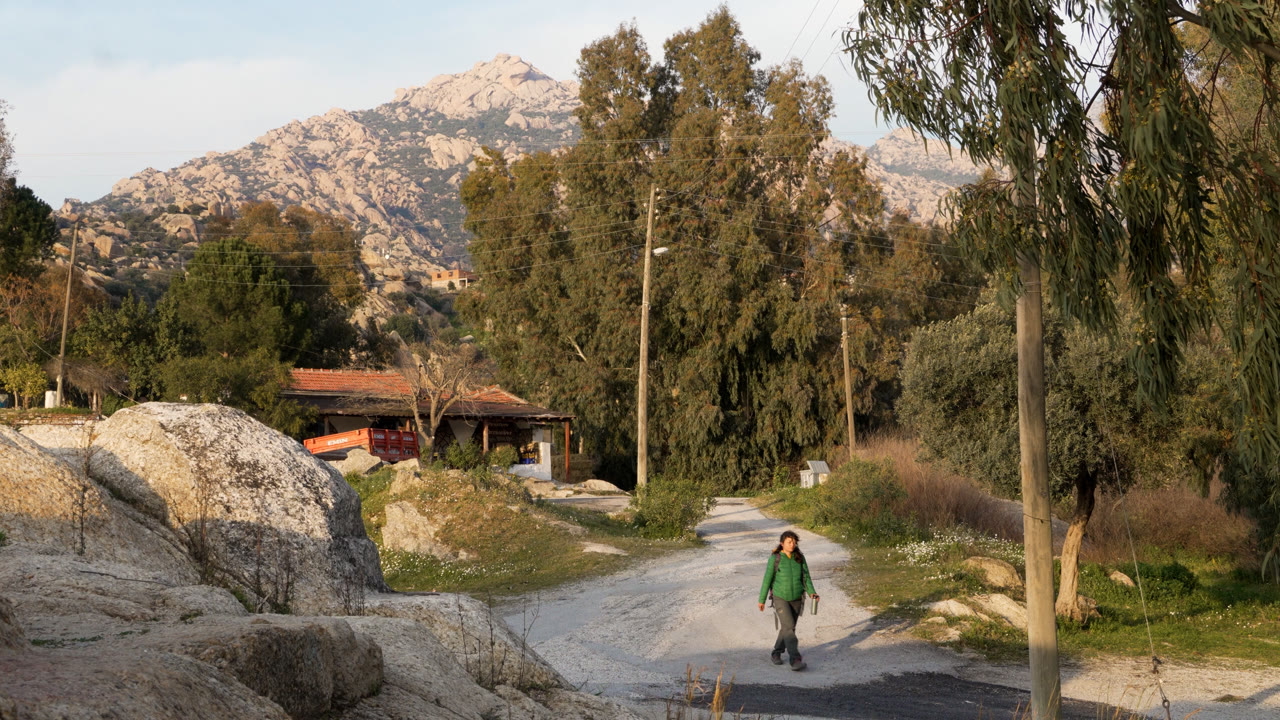
Fifty-three shots from one afternoon on the shore of Lake Bafa, cut to the structure of a single track. These are the decisions that made it, including the one I paid for and deleted.
Project Details
- Location: Kapıkırı, Bafa Gölü, Muğla
- Camera: Sony A6700, S-Cinetone, 25fps at 1/50
- Lens: Sony E 18-135mm F3.5-5.6 OSS
- Support: Handheld and a small tripod
- Role: Shot, cut and graded
- Cut: 53 shots, 3:44, 4K
- Music: Clever Ghost Music, “No Turning Back Now”
The track sets the length
The film is exactly as long as the music and not a second more. A track already carries an arc, and an edit that follows it inherits that arc for free. Loop the track to buy room and you ask the arc to happen twice, which flattens it. The audience hears the seam without being able to name it.
I placed section markers by ear and did not trust them, so I read the file instead. The track is instrumental, which means arrangement and level are the same thing, so the loudness curve is the structure. Sampling perceptual loudness in five second blocks across the whole track gave this:
| # | Section | In | Out | Length |
|---|---|---|---|---|
| 1 | Intro | 0:00 | 0:45 | 45s |
| 2 | First lift | 0:45 | 1:35 | 50s |
| 3 | The dip | 1:35 | 1:50 | 15s |
| 4 | Second build | 1:50 | 2:25 | 35s |
| 5 | Plateau to stop | 2:25 | 3:41 | 76s |
Five sections, matching the five I had marked by ear. The shape was right and every marker was one to two frames off, because a five second average cannot resolve a beat. The analysis confirmed the structure and my ear placed the cuts. Neither was enough alone.
It also told me two things I would not have felt.
There is a fifteen second dip at 1:35. A genuine pull back to intro levels in the middle of the film. That is where the quiet centre goes.
There is no come down. I had planned an outro. The track climbs to a plateau at 2:25 and holds flat for seventy-six seconds before stopping dead. Seventy-six seconds with no help from the music means the pacing carries it alone, so that section runs on two and three second cuts with the strongest material spread across it rather than clustered.
Only the first shot of each section lands on the change in the music. Everything between runs on its own rhythm. Hard hit on the boundary, free in between.
Musical order, not chronological
Chronological is a slideshow. The strongest material goes where the track is strongest, whatever time of day it was shot. Inside a section the shots stay geographically connected, so the viewer moves through the village rather than jumping around it.
Emotional arc decides the sections. Geography decides the order within them.
The centre is not in the track at all
Halfway through, the music stops. Not ducked, muted.
From the rocks above the village I recorded the call to prayer carrying across the valley. The shot that runs under it holds the geography of the entire film in one frame: minaret on the left, castle ruins on the right, the village between them, the mountains stacked behind, the lake at the edge.
Cutting the music there started as a religious constraint and turned out to be the better edit. A full stop is more arresting than a quiet music bed, and the track hits harder for having been gone. The clip carries three seconds of its own room tone at its head, so the transition needs no constructed fade: the music falls away, the picture cuts, and real air holds the gap before the call rises into it. The picture cuts once during the recitation, on a natural pause. The audio runs unbroken across it.
Everything else is cut to a track anyone could have found. The call and that view came from being somewhere other people were not.
Light is a one way door
The flat seventy-six second passage splits by light. Everything bright goes in the first half, and the moment it cuts to the first sunset-lit shot the film has committed to evening. There is no cutting back to daylight without the exposure jumping.
The sunset run is one continuous seven minute take cut into moments, so the sun descends through them in real order. Nobody times a sunset. Taking moments from across one long recording is what makes it look composed.
The film ends after the music does. The track stops dead rather than resolving, and the last shot, boats on near black water, runs in silence to black. The stop becomes punctuation, and the final frame has nothing competing with it.
The clip I bought and cut
The film was going to open on an aerial. I licensed one, spent three sessions on it, and deleted it.
It was shot on a clear day with vivid blue water. Mine was overcast. I pulled saturation back, warmed it and pushed the midtones off blue, and it got closer without ever arriving, because those are different weather conditions and no grade reconciles them. It was also the only borrowed frame in a film that is otherwise one camera, one afternoon, one look.
So the film opens on a yellow food truck by the road with a dog asleep beside it. It loses the establishing geography and gains complete coherence, and it starts at ground level, where the whole film lives.
Grading
Two jobs, in order. Correction makes every clip consistent and neutral. The look is one creative pass across the whole film afterwards. Starting with the look is why grading feels overwhelming.
Overcast S-Cinetone on this body runs cool by a consistent amount, so nearly every village clip needed the same correction. That is a white balance setting rather than a grading job, and it gets set in camera next time.
The sunset run is the opposite problem. Those clips read with red high and blue low, and that gap is the sunset. Neutralise the parade there and you delete the light. Real colour is not a cast: a yellow aircraft pushes red, foliage pushes green. The test is whether the things that should be neutral are neutral.
The look pass was one adjustment layer at vibrance +20. That was all of it. After getting 53 clips consistent, a heavy preset undoes the work in a click, and the film’s identity comes from the light and the place rather than from a grade.
Titles
Plain text, no template. What reads as cinematic is restraint, and templates are built to look impressive in isolation, which fights everything a quiet film is doing.
Inter, chosen partly because it handles Turkish properly. The dotless ı in Kapıkırı and the ö and ü in Gölü all had to survive at title size, and that was checked before anything else was decided.
No brand mark at the front. A logo before the film delays it. The name goes at the end, once someone has watched the thing.
What changes next time
- A fixed ND, not a variable. The variable’s colour cast is what pushed me to stop down instead of filtering, and diffraction softened about a third of the film. A fixed strength on a magnetic mount removes the whole chain.
- A windshield on the mic. Broadband wind sits on the same frequencies as a voice, so no software removes it cleanly. It is a recording problem, not an editing one.
- Clean ambient at every location. A few seconds of room tone on its own gives you something to work from later.
- Consistent screen direction on approaches. I wanted the road on the same side across the opening and did not have the coverage.
I drove out there because my barber mentioned the lake and, two days later, a stranger in a coffee shop named the village. That was the whole plan.